

In 2025, most K-pop challenges look the same: 15 seconds of point choreography, a catchy hook, and a race to see which idol can make the move trend on TikTok, Reels, and Shorts.
Then Soran, a veteran Korean indie band, quietly dropped an EP called “DREAM” with a title track named “Love Is No Sin” (Korean: 사랑한 마음엔 죄가 없다, Saranghan Maeumen Jwega Eopda) and decided to do something completely different.
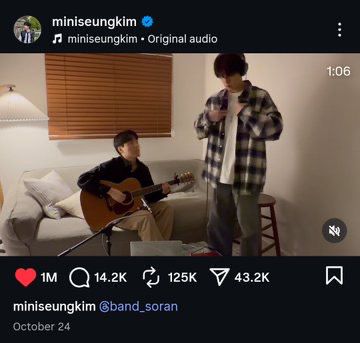
Instead of pushing a dance, they launched a vocal challenge—now widely known as the “SaMaJwe Challenge”—and suddenly everyone’s algorithm was full of idols standing next to a live band, pouring their hearts into the same aching chorus.
Here’s why K-pop is obsessed with it.
Who Are Soran, and What Is “Love Is No Sin”?
Soran (소란) are a South Korean indie rock band formed in 2009, known for warm, melodic rock and emotionally honest lyrics.
In October 2025, they released the EP “DREAM”, with “Love Is No Sin” as the title track. The EP is especially meaningful: after about 15 years together, it’s framed as the last release of Soran’s current band setup before transitioning into a new system centered on vocalist Ko Young-bae.
Musically, “Love Is No Sin” is:
-
A modern rock ballad with gentle build-up and a soaring chorus
-
Full of live-band warmth—guitar, drums, bass, and a vocal line that feels like it could be from a drama OST, but with indie sensibility
-
Crafted to highlight tone, breath control, and emotional delivery rather than just high notes
Lyrically, the song is about not blaming yourself for having loved someone, even after a breakup. The narrator is a mess—still checking if their ex is eating, wondering what they’re doing—but refuses to treat their sincere feelings as something shameful. The key line, paraphrased, is:
There is no fault in a heart that has loved.
That single idea becomes the emotional spine of both the song and the challenge.

How the “SaMaJwe” Vocal Challenge Works
The “SaMaJwe Challenge” takes its name from the shortened Korean title 사마죄 (Sa-Ma-Jwe), from Saranghan Maeumen Jwega Eopda (“Love Is No Sin”).
The format is brilliantly simple:
-
Live band setup
Soran perform “Love Is No Sin” in a studio, rehearsal room, or backstage setup—real instruments, no flashy set design. -
Guest vocalist enters on the chorus
Ko Young-bae sings the verse, then does a little “pass the mic” gesture as the chorus hits. The guest—usually an idol main vocal or respected singer—takes over and sings the main hook. -
One take, raw emotion
It’s usually shot like a live clip: no heavy filters, minimal editing, and lots of focus on breathing, facial expressions, and dynamics.
That’s it—no choreography, no elaborate storyline. Just a band, a mic, and a voice.
In a short-video era, that minimalism is exactly what makes it pop out on people’s feeds.
The Idol Line-Up That Supercharged the Trend
The challenge could have stayed small, just another indie collab project. Instead, it exploded because Soran invited some of the most respected vocalists in K-pop.
The Kpopping feature highlights a core lineup that’s been getting tons of attention:
-
Eunho (PLAVE) – bringing virtual-idol fandom into a live-band setting
-
Young K (DAY6) – an already beloved band vocalist whose tone fits rock ballads perfectly
-
Kihyun (MONSTA X) – known for power and control
-
Eunji (Apink) – one of K-pop’s most stable female main vocals
-
Taesan (BOYNEXTDOOR) – representing a younger generation of boy-group vocals
But the guest list doesn’t stop there. Across YouTube Shorts, Instagram Reels, and X/Twitter clips, you’ll find:
-
Hyolyn, legendary vocal queen and former SISTAR member
-
Eunha (VIVIZ / ex-GFRIEND), whose clear tone gives the chorus a bright, nostalgic color
-
Jeong Sewoon, sweet-voiced soloist and songwriter
-
Youngjae (GOT7), blending soulful R&B color with rock ballad phrasing
-
Sung Hanbin (ZEROBASEONE), carrying a 5th-gen boy-group fandom into the challenge
Every new upload pulls another fandom into the “Love Is No Sin” universe, and because Soran reposts and compiles these clips across their YouTube and social accounts, the challenge keeps resurfacing on people’s For You Pages.

Why This Vocal Challenge Feels So Different
1. It Puts Singing Front and Center
Most viral K-pop challenges now are dance-driven: if the move is catchy enough, the song spreads. “Love Is No Sin” flips the script by making vocal interpretation the main content.
As Kpopping points out, the chorus is melodic, singable, and beautiful—it gives singers plenty of room to show tone and control without turning into a high-note screaming contest.
That makes it:
-
Manageable enough for non-professionals to try
-
Rich enough for pros to show off nuance, not just range
In other words, it becomes a vocals-first trend in a choreo-first ecosystem.
2. One Melody, Many Colors
Because each clip uses the same chorus, fans can compare how different voices transform it:
-
Some idols keep it soft and conversational
-
Others lean into rock power and vibrato
-
Some let their voices crack slightly on emotional lines, emphasizing the pain instead of perfection
Kpopping describes this as the “fun part”—hearing how each vocalist slides into the same melody while still sounding entirely themselves.
For vocal-obsessed fans, it’s like watching an unofficial “Singer’s Version” compilation in real time.
3. Authentic, Low-Budget Aesthetic in a High-Budget Era
There’s a certain charm to the visual language of the challenge:
-
No glossy green-screen sets
-
Casual clothes, band practice rooms, or simple studio lighting
-
Soran visibly playing their instruments alongside the guest
That live-session vibe feels closer to indie showcases and festival clips than to hyper-edited music-show stages, which fits perfectly with Soran’s roots as a band.
In an algorithm flooded with polished performance videos, this rough-around-the-edges warmth feels human.
4. The Lyrics Match the Emotional Energy
The line “there is no fault in a heart that has loved” hits hard for anyone who’s gone through a breakup or unrequited love and then spent months blaming themselves.
When idols sing this chorus, it doesn’t feel like empty sentiment; it feels like a little moment of catharsis where:
-
The melody is bittersweet but comforting
-
The words promise that sincere love is never wasted
-
The setting (a room full of musicians) gives it the intimacy of a live confession
That emotional coherence—music, lyrics, and format all aligned—is a big reason viewers keep rewatching and sharing.
What “Love Is No Sin” Means for Soran and the Band Scene
For Soran, the success of the “SaMaJwe Challenge” is more than just a viral moment.
-
“DREAM” debuted strongly on indie charts, with Japanese K-indie coverage highlighting it as a standout release and noting that its songs carry messages of gratitude and farewell, fitting for a band at a turning point.
-
On Korean charts, “Love Is No Sin” has registered on the Circle Download Chart as part of the EP’s run, showing that a band track in 2025 can still find digital life in a very idol-dominated field.
What’s interesting is how the challenge has:
-
Bridged scenes – Indie band + idol main vocal is a combination that used to mostly happen on variety shows or OSTs. Here, it’s happening directly on social content.
-
Reframed bands in the eyes of younger fans – For many Gen Z and 5th/6th-gen K-pop fans, “Love Is No Sin” might be their first real entry point into a Korean indie band’s catalog.
-
Proved that band music can still drive trends – It’s not EDM drops or hyperpop; it’s guitar-driven, emotional rock. But the challenge format is so smart that it works perfectly in 15–30 second clips.
In a way, “Love Is No Sin” is functioning like a farewell letter and an introduction at the same time—closing one era of Soran while opening them up to a much younger, global K-pop audience.
What This Trend Says About K-Pop Right Now
The obsession with the “Love Is No Sin” vocal challenge reveals a few bigger shifts:
-
Fans are hungry for vocal-centered content. After years of dance challenges, something that rewards listeningfeels refreshing.
-
Collab-style challenges are rising. Instead of idols dancing alone in a practice room, you get them in the same frame as the original artist, making the content more special and less disposable.
-
Indie and idol worlds are overlapping more. The SaMaJwe Challenge is basically a live, ongoing crossover event between band culture and idol culture.
If you zoom out, “Love Is No Sin” feels like part of a larger movement where musicians are reclaiming short-form platforms as places to showcase singing and musicianship, not just choreography.
Where to Start If You’re New to the Challenge
If you want to dive into the “SaMaJwe” rabbit hole, here’s a good watch-order:
-
Original MV & live clips – Get a feel for Soran’s own performance first.
-
Eunho (PLAVE) and Young K (DAY6) – Two very different male tones on the same melody.
-
Eunji (Apink) & Eunha (VIVIZ) – For female vocal takes that balance clarity and emotion.
-
Hyolyn or Youngjae (GOT7) – To see how veteran voices reinterpret the song with fully developed color.
And of course, keep an eye on Soran’s YouTube channel and socials, because new collabs are still being posted and reshared.
In the end, the reason K-pop is obsessed with “Love Is No Sin” right now is simple:
it proves that even in the age of endless scroll, a single beautiful melody, sung honestly, can still stop people in their tracks.